Guides
YouTube channel pricing: costs, revenue and profit
YouTube channel pricing starts with production costs, then uses ad revenue, sponsorships, memberships and a worked example to estimate monthly profit.
What to take away
- YouTube channel pricing starts with your cost per videoshoot days, edit hours, licenses, gear wear and contractor shares.
- YouTube keeps 45 percent of long-form ad revenue and pays creators 55 percent. Shorts pay 45 percent of the Creator Pool after music licensing comes off. Watch time and RPM decide ad income; subscriber count does not.
- Sponsors buy deliverables. Quote a flat fee per integration, name the revision rounds, and put the usage window in writing. US mid-roll integrations commonly run $20 to $50 per 1,000 views.
- Channel memberships, Super Thanks and Super Chat pay out through the YouTube Partner Program at a 70 percent creator share.
- Track four numbers every monthcost per published video, RPM, sponsor revenue per 1,000 views and days to collect.
This article covers creator-business operations in general. It is not platform, tax, copyright, endorsement, privacy or legal advice. YouTube terms, monetization eligibility and sponsor rules change, so check current YouTube documentation and qualified counsel before you act.
Most YouTube channel pricing advice starts with what other channels charge. That is backwards. Your floor comes from what one video costs you to make, and your ceiling comes from what the audience is worth to an advertiser. Everything between those two numbers is a negotiation you can prepare for.
Cost per video is the number you cannot skip
Add the hours, not the feelings. A talking-head video with one camera and a lav mic is a different product from a documentary short with a second unit. Both get priced from the same list.
Gear and software list prices
- $800Sony ZV-E10 kit
- $399Shure SM7B mic
- $300Rode Wireless GO II
- $295DaVinci Resolve Studio one-time
Cost lines per upload
- Research and scripting hours
- Shoot hours with setup and teardown
- Edit hourscolor, captions, audio
- Thumbnail and title variants
- Licensesmusic, stock, fonts, location
- Gear wearreplacement cost per shoot
- Contractor shares and software subscriptions
Count these lines for every upload:
- Research and scripting hours at your own hourly rate. Freelance scriptwriters commonly bill $40 to $75 an hour in the US.
- Shoot hours, including setup, retakes and teardown.
- Edit hours, including color, captions and audio repair. US freelance editors typically bill $30 to $75 an hour.
- Thumbnail and title testing, usually two to four variants. Fiverr designers commonly charge $25 to $150 per thumbnail.
- Licensesmusic, stock footage, archive, fonts, location fees. Epidemic Sound and Artlist typically run $10 to $25 a month for a single creator.
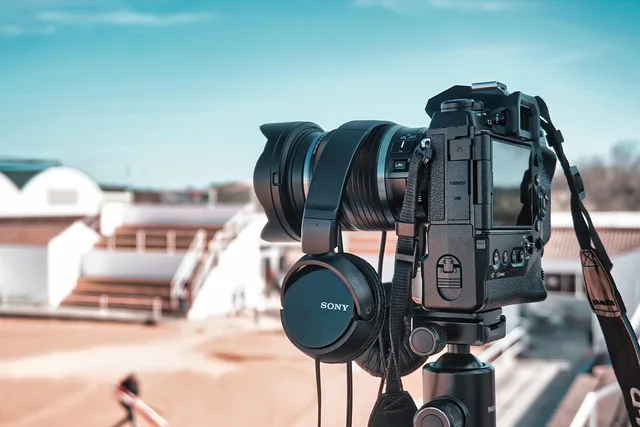
- Gear weardivide replacement cost by the shoots each item survives. A Sony ZV-E10 kit lists near $800, a Shure SM7B mic near $399, a Rode Wireless GO II near $300.
- Contractor shareseditor, thumbnail designer, researcher, channel manager.
- Software subscriptions spread across the videos you publish in a month. Adobe Premiere Pro lists at $22.99 a month for the single app, Creative Cloud All Apps at $59.99, DaVinci Resolve Studio at a $295 one-time license, Final Cut Pro at $299.99.
Gear wear is easy to underestimate. A $1,500 camera body that survives 200 shoots costs $7.50 per shoot.
A channel publishing four videos a month with 20 total labor hours each, at a $40 hourly cost, carries $3,200 in labor before licenses. Add $400 a month for music, stock and editing software, and the production floor lands near $3,600. That is a monthly break-even, not a per-video one, because fixed costs spread across the slate.
The revenue lines and what each actually pays
YouTube ad revenue is not a rate you set. It is a share of what advertisers paid, and the split depends on the format.
Creator share by revenue line
Revenue line
- Long-form ads
- 55%
- Shorts ads
- 45% of pool
- Memberships
- 70%
- Super Thanks
- 70%
- Premium
- Same as long-form
Creator share
- Long-form ads
- Monetized watch time
- Shorts ads
- Shorts views
- Memberships
- Recurring monthly fee
- Super Thanks
- Individual payments
- Premium
- Premium watch time
Paid on
- Long-form ads
- Shorts ads
- Memberships
- Super Thanks
- Premium
Revenue lines and payouts
| Revenue line | Creator share | Paid on | Set by |
|---|---|---|---|
| Long-form ads | 45% to YouTube, 55% to the creator | Watch time on monetized playback | Advertiser bids, season, audience geography |
| Shorts ads | 45% of the Creator Pool | Shorts views, after music costs | Pool size, music licensing deductions |
| Channel memberships | 70% to creator | Recurring monthly fee | Your tier prices, $0.99 to $499.99 |
| Super Thanks and Super Chat | 70% to creator | Individual payments | Viewer generosity, live vs upload |
| YouTube Premium | Same ad split as long-form | Watch time on Premium playback | Platform pool, audience geography |
RPM, revenue per thousand views, is the figure you compare month to month. It moves with season, audience country and topic. Typical US RPMs run $10 to $30 for business and finance channels, $1 to $5 for gaming and entertainment, and $2 to $8 across most channels. Use your own prior months, not a stranger's screenshot.
The Partner Program opens at 1,000 subscribers plus 4,000 public watch hours in 12 months, or 10 million Shorts views in 90 days. Fan funding opens earlier, at 500 subscribers with three public uploads in 90 days and either 3,000 watch hours or 3 million Shorts views.
Membership tiers you set yourself, from $0.99 to $499.99 a month. Most channels put the first tier between $2.99 and $4.99. Three hundred members at $4.99 grosses $1,497 before YouTube's 30 percent and payment fees.
Sponsorship is the line you control. A host-read integration is priced as a deliverable: a 60 to 90 second segment, one revision, a stated usage window, and a link in the description. Quote it as a flat fee.
If a brand asks for cost per view, you are now selling media, and that is a different contract with different obligations.
Pricing a sponsorship from the deliverable, not the rate card
Sponsors rarely publish what they pay. What they publish is what they want: a placement, a duration, a disclosure, and sometimes exclusivity in a category.
Build the quote from these parts:
- Placementpre-roll mention, mid-roll integration, dedicated video, or Short.
- Durationseconds of host-read copy, plus on-screen time for a product shot.
- Production loaddoes the brand supply footage, or do you shoot it?
- Revision roundsstate the number. A third round is a change order.
- Usage rightscan the brand run your clip as a paid ad, and for how long?
- Exclusivitydoes the deal block you from a competing sponsor for 30, 60 or 90 days?
- Disclosurea paid promotion must be disclosed. The Federal Trade Commission's Advertising FAQs: A Guide for Small Business sets out that endorsements must reflect honest experience and that material connections must be disclosed.
Host-read rates vary by audience size and topic. The view-based shortcut below gives a way to estimate a flat fee without relying on a tier-by-tier rate card.
Sponsorship rate by subscriber band
- 10k to 50k subs$250 to $1,000
- 50k to 250k subs$1,000 to $5,000
- 250k to 1M subs$5,000 to $20,000
- Above 1M subs$20,000 and up
The shorter shortcut is $20 to $50 per 1,000 expected views. A 60-second mid-roll on a video that usually draws 50,000 views prices at $1,000 to $2,500.
Exclusivity is where small channels lose money. A 90-day category lock on a $2,000 integration can cost you two better offers in the same quarter. Price the lock at 25 to 50 percent of the fee, or shorten it.
Worked example: a four-video month
Take a channel with 400,000 monthly views, an RPM of $4, and one sponsor slot per video.
Four-video month at a glance
- $1,600 | Ad revenue at $4 RPM
- $6,000 | Four sponsorships at $1,500
- $1,050 | Memberships after fees
- $4,950 | Month cleared before tax
Gross for the month is about $8,800. Subtract the $3,200 labor, $400 in licenses and software, and $250 in payment and platform fees. The channel then clears roughly $4,950 before income tax.
That works out to $962.50 of cost per published video and about $1,237 of profit per video.
Now change one variable. If RPM drops to $2 in a slow January, ad revenue halves to $800 and the month clears $4,150. The sponsor line, not the ad line, is what keeps the channel stable. That is why the deliverable price matters more than the view count.
Payment timing, fees and the money that arrives late
Ad revenue and fan funding arrive through the YouTube Partner Program on a monthly cycle. AdSense releases the balance once it passes $100, usually between the 21st and the 26th of the following month. Sponsors pay on invoice, and the terms you accept decide your cash position.
When the money actually lands
- Month endAd and fan revenue accrues
- 21st to 26thAdSense releases balance over $100
- 60-day netSponsor invoice clears
- Day 90Signed deal finally pays
Track days to collect as a headline number. A 60-day net sponsor term on a $6,000 month means you fund two months of production before the money lands.
Watch these deductions:
Payment timing and fees
- Payment processor and currency conversion fees on international sponsors, typically 1 to 3 percent.
- Agency or marketplace commission if a brand deal is brokered through a platform, often 10 to 20 percent.
- Withholding on cross-border sponsor and ad payments, up to 30 percent where no US tax treaty applies and often 0 to 15 percent under a treaty.
- Failed payments and chargebacks on membership tiers.
The Internal Revenue Service's Publication 583, Starting a Business and Keeping Records, explains recordkeeping. Keep documents that clearly show income and expenses, including platform statements, sponsor invoices and contractor payments. How you report that income, and which forms apply, is a question for a licensed CPA or tax attorney.
What to measure every month
Four numbers, reviewed on the same day each month, will tell you more than a dashboard.
- Cost per published video.
- RPM.
- Sponsor revenue per 1,000 views.
- Days to collect.
Four monthly numbers
- Cost per published video
- RPM versus your own prior months
- Sponsor revenue per 1,000 views
- Days to collect from invoice
- Share of videos hitting retention target
Add one quality check: the share of published videos that hit their retention target. A channel with rising cost per video and falling retention is buying production it cannot monetize.
For labor rates, the Bureau of Labor Statistics publishes Occupational Employment and Wage Statistics by occupation, industry, state and metro area. Film and video editors show a median wage near $65,000 a year there. Use it as one input when you set what you pay an editor or a producer, not as a fixed answer.
Where the operation breaks
Three failures show up again and again on small channels.
Three ways small channels break
Failure
- Overbuying production
- $2,500 body, no RPM gain
- Sponsor contract liability
- Indemnity, morality, approval rights
- Booked revenue as cash
- $10,000 paid in 90 days
What it looks like
- Overbuying production
- Raise break-even instead
- Sponsor contract liability
- Have counsel read it
- Booked revenue as cash
- Fund next invoice yourself
The fix
- Overbuying production
- Sponsor contract liability
- Booked revenue as cash
The first is overbuying production. A Sony A7 IV body lists near $2,500 and does not raise RPM. It raises your break-even, and the channel now needs more sponsor slots to survive.
The second is signing a sponsor contract that shifts liability. Indemnity clauses, morality clauses and content approval rights can hand the brand control over your editorial calendar. Read the whole contract, and have counsel read the parts you do not understand.
The third is treating booked revenue as cash. A signed $10,000 deal paid in 90 days does not cover next month's editor invoice.
The Small Business Administration's Business Guide organizes its resources around four stages of a business.
The stages are:
- planning
- launch
- management
- growth
The guide covers market research, startup costs, insurance and finance. Use it as a structural checklist for the business side, not as a pricing formula.
Common questions
Does YouTube set my ad rate?
No. Advertisers bid in an auction and YouTube keeps 45 percent of long-form ad revenue, leaving you 55 percent. Shorts pay 45 percent of the Creator Pool after music costs. Your RPM is an outcome of your audience, topic and season, not a price you choose.
How do I price a sponsorship with no rate card to copy?
Price the deliverable. Add your production cost for the segment, the value of the exclusivity window, and the usage rights the brand wants. A 60-second mid-roll in the US typically clears $20 to $50 per 1,000 expected views. Then quote a flat fee and state the revision rounds. Never quote from another channel's leaked media kit.
Which figures should I never guess?
Tax treatment, withholding, contract liability and disclosure requirements. Name the authority, the IRS or the FTC, and take the specific question to a CPA, a tax attorney or qualified counsel.
What changes for 2027?
Platform shares, eligibility thresholds and sponsor marketplace terms change on YouTube's own schedule. Check the current YouTube Partner Program terms and your sponsor contracts each quarter rather than relying on a figure from a guide.